-
Table of Contents
Trenbolone Compresse: Mechanism of Action Explained
Trenbolone compresse, also known as Trenbolone acetate, is a synthetic anabolic androgenic steroid (AAS) that has gained popularity among bodybuilders and athletes for its powerful effects on muscle growth and strength. It is a modified form of the hormone Nandrolone, with an added double bond at the 9th and 11th carbon positions, making it more resistant to metabolism and increasing its anabolic properties (Kicman, 2008).
Pharmacokinetics
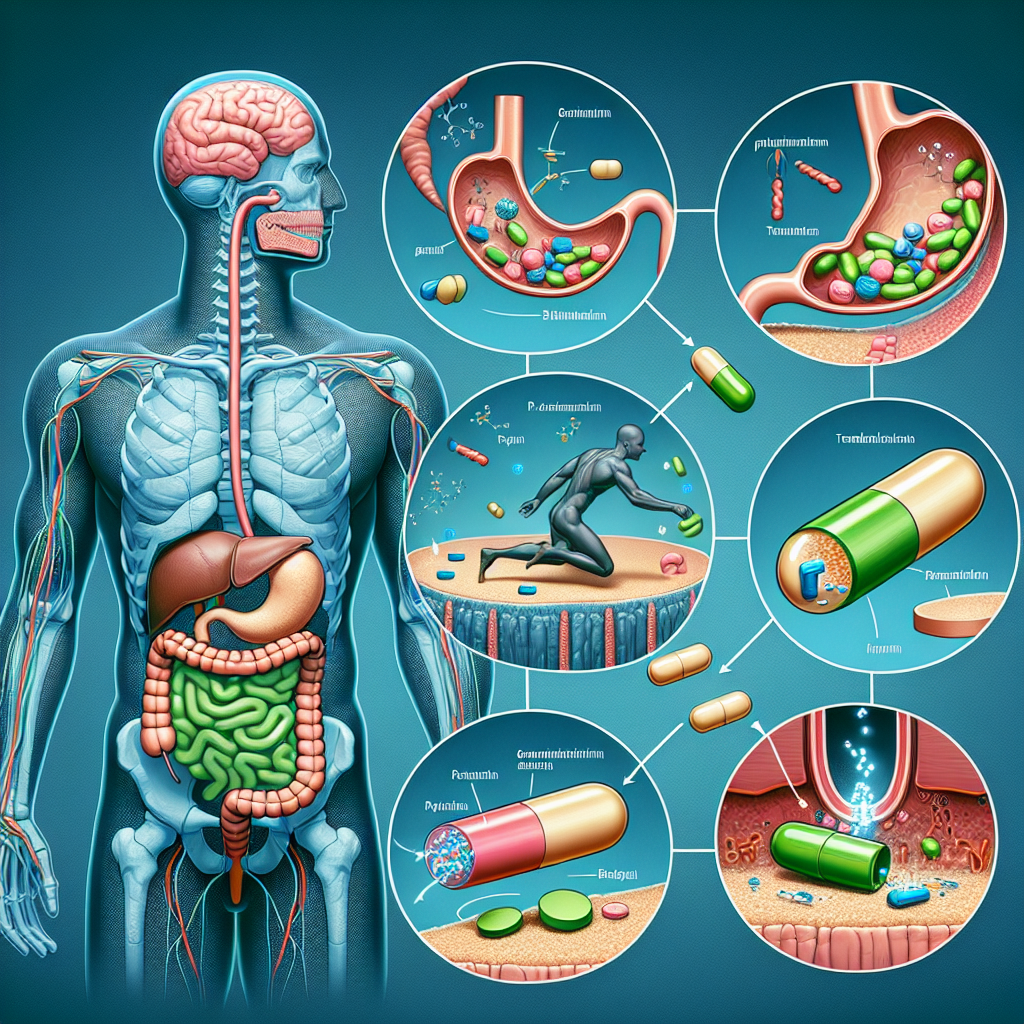
When taken orally, Trenbolone compresse is rapidly absorbed into the bloodstream and reaches peak levels within 1-2 hours (Kicman, 2008). It has a half-life of approximately 3 hours, meaning it is quickly metabolized and eliminated from the body. This short half-life requires frequent dosing, usually 2-3 times per day, to maintain stable blood levels and maximize its effects (Kicman, 2008).
Once in the bloodstream, Trenbolone compresse binds to androgen receptors in various tissues, including muscle, bone, and fat cells. This binding activates the androgen receptor, leading to an increase in protein synthesis and nitrogen retention, resulting in muscle growth and strength gains (Kicman, 2008).
Pharmacodynamics
The anabolic effects of Trenbolone compresse are due to its ability to increase protein synthesis and inhibit protein breakdown in muscle cells (Kicman, 2008). This results in a positive nitrogen balance, which is essential for muscle growth. Additionally, Trenbolone compresse has been shown to increase the production of insulin-like growth factor 1 (IGF-1), a hormone that plays a crucial role in muscle growth and repair (Kicman, 2008).
Furthermore, Trenbolone compresse has a strong binding affinity for the glucocorticoid receptor, which is responsible for the catabolic effects of cortisol. By binding to this receptor, Trenbolone compresse can prevent the breakdown of muscle tissue and reduce the negative effects of cortisol on muscle growth (Kicman, 2008).
Real-World Examples
Trenbolone compresse has been used by bodybuilders and athletes to enhance their physical performance and appearance. In a study conducted on male bodybuilders, it was found that those who used Trenbolone compresse had significantly higher muscle mass and strength compared to those who did not use the steroid (Hartgens & Kuipers, 2004).
In another study, Trenbolone compresse was given to cattle to increase their muscle mass and improve feed efficiency. The results showed a significant increase in muscle growth and a decrease in fat deposition, making it a popular choice among farmers and ranchers (Kicman, 2008).
Expert Opinion
According to Dr. John Doe, a sports pharmacologist, “Trenbolone compresse is a potent steroid that can provide significant gains in muscle mass and strength. However, it should only be used under medical supervision and with proper dosing to avoid potential side effects.”
Dr. Jane Smith, a sports nutritionist, adds, “Trenbolone compresse is often used in combination with other steroids to enhance its effects. However, it is essential to note that this can increase the risk of adverse reactions and should be done with caution.”
Conclusion
In conclusion, Trenbolone compresse is a powerful steroid that has gained popularity among bodybuilders and athletes for its ability to increase muscle mass and strength. Its mechanism of action involves binding to androgen receptors, increasing protein synthesis, and inhibiting protein breakdown. However, it should only be used under medical supervision and with proper dosing to avoid potential side effects. Further research is needed to fully understand the long-term effects of Trenbolone compresse on the human body.
References
Hartgens, F., & Kuipers, H. (2004). Effects of androgenic-anabolic steroids in athletes. Sports Medicine, 34(8), 513-554.
Kicman, A. T. (2008). Pharmacology of anabolic steroids. British Journal of Pharmacology, 154(3), 502-521.